In the complex world of industrial piping, particularly within the oil and gas sector, safety and durability are non-negotiable. Among the various standards that govern pipe fittings, few are as critical as those established by NACE (National Association of Corrosion Engineers), now known as AMPP.
If you are sourcing pipe fittings for environments containing Hydrogen Sulfide (H2S), understanding NACE standards is not just about compliance—it is about preventing catastrophic failures.
In this article, we will explore what NACE means for pipe fittings, the manufacturing processes involved, and why these components are essential for "sour service" applications.
What is NACE in the Context of Pipe Fittings?
NACE International sets the global standards for corrosion control. For pipe fittings (such as elbows, tees, reducers, and flanges), the two most critical standards are:
NACE MR0175 / ISO 15156: This standard targets upstream oil and gas production. It addresses materials used in environments containing wet $H_2S$ (sour gas) to prevent Sulfide Stress Cracking (SSC).
NACE MR0103: This standard is specific to downstream refinery environments. It focuses on resisting Sulfide Stress Cracking in refining processes where the conditions differ from upstream extraction.
Simply put, a "NACE Fitting" is a carbon steel or alloy fitting manufactured specifically to resist corrosion and cracking in harsh, sulfur-rich environments.
Why is NACE Compliance Critical?
The primary enemy NACE standards fight is Sulfide Stress Cracking (SSC).
When pipe fittings are exposed to fluids containing water and hydrogen sulfide under stress, the metal can become brittle and crack without warning. This is known as "Sour Service."
The role of NACE fittings includes:
Safety: Preventing sudden leaks or explosions caused by metal fatigue.
Longevity: Extending the lifespan of the pipeline infrastructure.
Cost Efficiency: Reducing maintenance downtime and replacement costs.
The Manufacturing Process: How NACE Fittings Are Made
Manufacturing a NACE-compliant fitting (e.g., A234 WPB NACE) is more rigorous than producing a standard fitting. It requires strict control over raw materials and processing methods.
1. Chemical Composition Control
The steel used must have high purity. Key elements are strictly limited:
Sulfur (S): Usually kept extremely low (often < 0.010% or even < 0.002% for high-end requirements) to reduce inclusions.
Phosphorus (P): Strictly controlled to maintain ductility.
Carbon Equivalent (CE): Managed to ensure weldability and toughness.
2. Heat Treatment
This is the most critical step. NACE fittings typically undergo specific heat treatments such as Normalizing or Quenching and Tempering.
Purpose: To refine the grain structure of the steel and relieve internal stresses caused by forming (forging or pressing).
Result: A homogenous microstructure that is less susceptible to cracking.
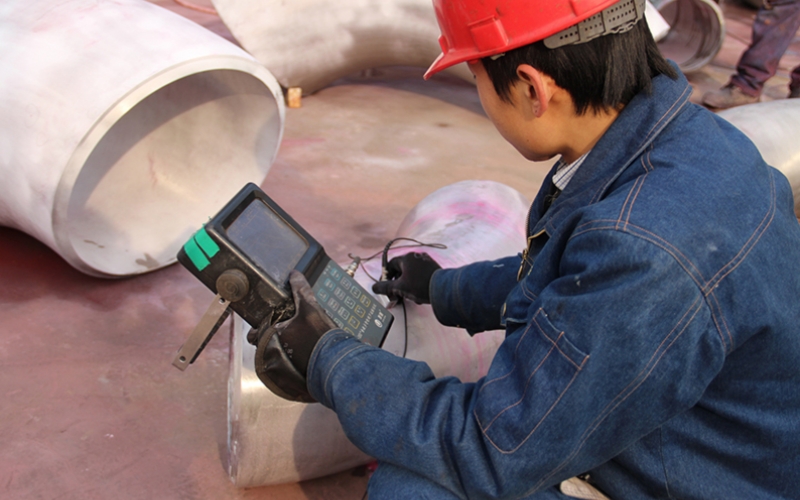
3. Hardness Testing (The Golden Rule)
According to NACE MR0175, the hardness of carbon steel fittings must be strictly controlled.
The Limit: The maximum hardness is generally 22 HRC (Rockwell C).
Why? Harder steel is more brittle and prone to cracking in sour environments. We ensure every batch is tested to stay below this threshold.
4. Additional Testing (HIC & SSCC)
For critical projects, clients often request:
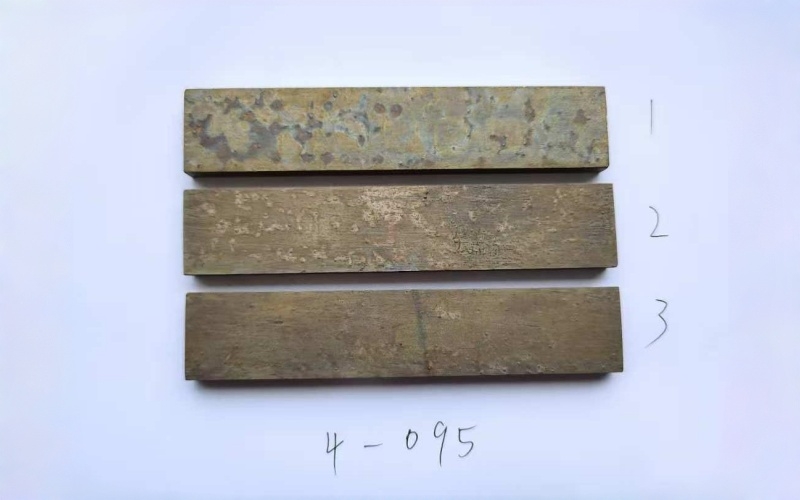
HIC Test (Hydrogen Induced Cracking): Testing the steel's resistance to hydrogen blistering.
SSCC Test (Sulfide Stress Corrosion Cracking): Verifying performance under tensile stress in a sour environment.
Common Applications of NACE Fittings
You will typically find NACE-compliant fittings in the following sectors:
Oil & Gas Exploration (Upstream): Wellheads, gathering lines, and subsea pipelines where raw crude oil and natural gas (often "sour") are extracted.
Petroleum Refining (Downstream): Desulfurization units and hydrocracking units where $H_2S$ is a byproduct of the refining process.
Chemical Processing: Plants handling acids and corrosive gases.
Conclusion
Choosing the right pipe fittings is about matching the material to the environment. For projects involving Hydrogen Sulfide, NACE-compliant fittings are not an option—they are a necessity.
At Yuanke Pipeline, we specialize in supplying high-quality, NACE MR0175/MR0103 compliant pipe fittings. From rigorous hardness testing to providing detailed Mill Test Certificates (MTC type 3.1/3.2), we ensure your project remains safe and durable.
Looking for NACE-compliant Flanges or Fittings? [Contact Us Today] for a quote.